
 People who live near the beach already deal with various factors which can make life a little harder. It’s the price they pay for living so close to such a great recreational location. The saltwater spray affects outdoor equipment, cars, furniture and just about anything not covered. Corrosion is exponential the closer you are to the ocean. Salt water is very corrosive.
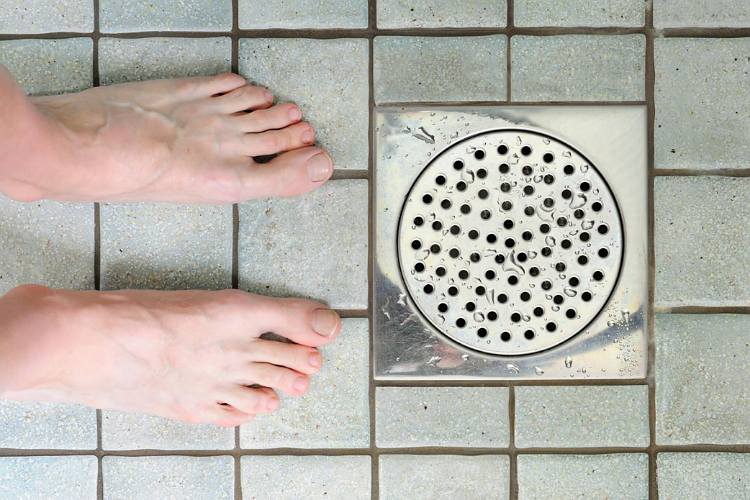
Another aspect of living near the beach is all the sand that you drag in. Sand literally gets tracked everywhere. And according to a plumber in Melbourne, Florida this sand can and does cause drain clogs, especially in the shower. “We get at least a dozen clogged drain calls per year where the main culprit is beach sand. We solve the issue using a combination of factors that include a suction device and a drain snake. Some of them can be very stubborn but we get the job done.”
Sand seems harmless enough. It’s wispy and easily carried in the wind. But sand sediment can be hard and heavy. A little sand is not problem, but a lot of sand can cause a major blockage. Think about it like this. Heated and hardened sand creates glass. And sand propelled at high speed is a very effective way to clean off even the most hardened textures. It’s an interesting and versatile substance.
In fact, sand can be a very effective way to refresh plumbing pipes to “like new” conditions if used in a sandblaster. But sand as a free-floating substance can be heavy and a stubborn drain blocker. That’s when you may need to call a professional to have your drain cleared.
As far as drain blockages go, the DIY approach is a good idea if the blockage is easy to identify and is near the entry point. But if the blockage is deep in the pipe, you almost always need to call a professional. They have the tools to remove most any stubborn blockage.
A Brief History of Plumbing
The history of plumbing spans nearly 5,000 years, evolving from basic drainage to sophisticated systems that underpin modern public health, sanitation, and convenience.
The earliest evidence of organized plumbing appears in ancient civilizations around 4000–3000 BCE. In Mesopotamia, clay pipes and channels managed wastewater and rainwater in cities like Nippur and Eshnunna. Around the same period, the Indus Valley Civilization (in present-day Pakistan and northwest India) developed remarkably advanced urban plumbing. Cities such as Mohenjo-Daro and Harappa featured standardized baked-clay pipes, covered street drains, private toilets connected to sewers, and sophisticated public baths—among the world’s first known examples of city-wide sanitation infrastructure.
By 2500–2000 BCE, ancient Egyptians introduced copper pipes, found in structures like the Pyramid of Sahure’s temple complex at Abusir. These carried water to palaces and temples, demonstrating early metalworking for plumbing. Egyptians also built elaborate drainage in elite homes and used simple siphons.
The Minoans on Crete around 1700 BCE created one of the earliest indoor plumbing systems, including terracotta pipes, a flushing toilet-like device in the palace at Knossos, and sophisticated drainage that separated stormwater from waste.
Ancient Rome (from around 312 BCE) elevated plumbing to an engineering pinnacle. Massive stone aqueducts delivered fresh water across vast distances—some carried over 1 billion liters daily—to cities, fountains, public baths (thermae), and private homes of the elite. Romans used lead (plumbum in Latin, hence “plumbing”) pipes for distribution because of their malleability and corrosion resistance, plus extensive underground sewers like the Cloaca Maxima. Public latrines with running water and sponge-on-stick hygiene tools were common in urban centers. Roman innovations influenced European plumbing for centuries.
After Rome’s fall (~5th century CE), plumbing knowledge declined in much of Europe during the Middle Ages. Sanitation often reverted to cesspits and open ditches, contributing to disease outbreaks.
Renewed progress emerged in the Renaissance. In 1596, Sir John Harington (godson of Queen Elizabeth I) invented an early flushing toilet, installed at Richmond Palace—nicknamed “the John” after him.
The 18th and 19th centuries brought transformative inventions. Alexander Cummings patented the S-bend trap in 1775, preventing sewer gases from entering homes. In the 1800s, cast-iron pipes replaced lead in many systems for durability. Flush toilets improved with Thomas Crapper’s refinements (though he did not invent the flush toilet). Urban waterworks expanded: Boston’s system in 1652, Philadelphia’s cast-iron mains in the 1800s.The 20th century modernized plumbing with galvanized steel, then copper and PVC pipes (post-WWII), ball-cock valves, pressure regulators, and widespread indoor plumbing in developed nations. Public health campaigns linked sanitation to reduced cholera and typhoid.
Today, plumbing includes eco-friendly low-flow fixtures, smart leak detection, greywater recycling, and efforts to provide clean water globally—building on millennia of ingenuity from clay pipes to intelligent infrastructure.
