
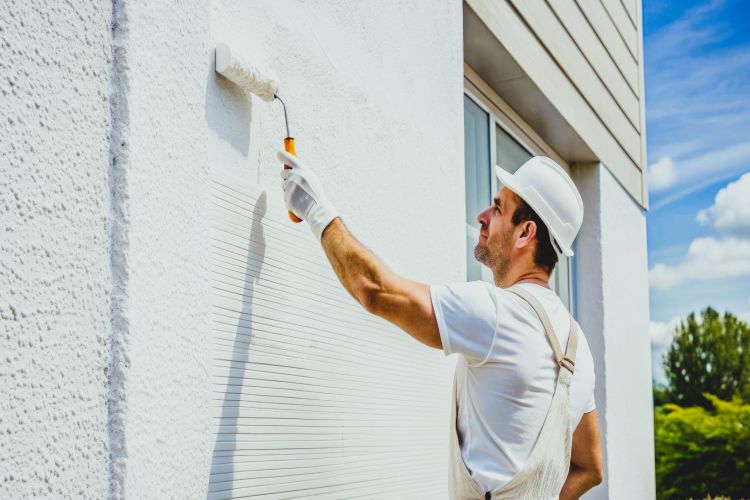
A paint job can fail long before the first rainstorm or season change. In many cases, the problem is not the coating itself but the temperature of the surface underneath it.
That distinction matters more than many building owners realize. Air temperature may look acceptable on paper, yet siding, stucco, metal, masonry, or trim can be far hotter or colder depending on sun exposure, wind, moisture, and material type. For property managers, facility teams, and owners responsible for exterior upkeep, understanding surface temperature is not a technical side note. It is a practical factor that shapes adhesion, curing, appearance, and how long a finish will actually hold.
Why Surface Temperature Changes Everything
1. Air Readings Do Not Tell Enough
Exterior coatings are applied to surfaces, not to the open air. That sounds obvious, but it is where costly assumptions begin. A weather app may show a mild afternoon, while a dark wall in direct sun is running far above that reading. On the other side of the day, a shaded elevation can stay cold long after the air warms. Paint responds to the substrate’s temperature because that is where the wet film meets porosity, moisture, and texture.
For building operators, this means scheduling cannot rely on ambient conditions alone. Surface temperature affects how quickly paint flashes off, how deeply it bonds, and whether the coating has time to level before curing begins. A project that looks well-timed on the calendar can still underperform if the wall temperature is off.
2. Heat On The Wall Surface
When exterior walls absorb strong sunlight, the temperature shift can be dramatic. Dark colors, dense materials, and western exposures tend to trap more heat, sometimes pushing the substrate well beyond the comfort zone for proper application. In field discussions, contractors and property teams reviewing job conditions often reference practical guidance from sources such as westchasepainting.com because surface heat, not just daytime forecast, can determine whether a coating cures evenly or fails early.
3. What High Surface Heat Does
When a wall is too hot, paint can dry too fast on the surface before it has bonded properly beneath. That rapid skinning effect often leads to poor film formation, reduced adhesion, lap marks, roller drag, and uneven sheen. On porous materials, the problem can become even more pronounced because the coating is being pulled into the substrate while heat accelerates evaporation from above. The result is a finish that looks set but has not developed in a stable, durable way.
This matters on commercial and residential properties alike. A rushed cure on sun-baked siding may not show obvious failure on day one. Problems often surface later as cracking, blistering, premature fading, or edge peeling around trim and joints where thermal stress is already concentrated.
4. Low Temperatures Slow Critical Reactions
Cold surfaces create a different set of problems, but the risk is just as real. When the substrate is too cool, paint may remain tacky too long, resist proper coalescence, or struggle to cure into a durable film. Adhesion becomes less predictable because the coating does not settle and bond as intended. Moisture also lingers longer on cold substrates, especially in the early mornings, late afternoons, and shaded conditions.
For building owners, the practical consequence is a delay layered atop risk. A surface that appears dry may still be carrying enough residual chill or dew to interfere with performance. Even when the finish eventually hardens, the initial bond may be weaker than expected, leaving the coating more vulnerable to weather cycling and seasonal movement.
5. Different Materials Hold Temperature Differently
Not all exteriors behave the same way under identical weather conditions. Metal heats rapidly and cools rapidly, often creating sharp swings over the course of a single day. Masonry and stucco can retain heat for longer periods, especially after sustained sun exposure. Wood expands and contracts with moisture and temperature shifts, which can amplify coating stress. Fiber cement and engineered materials bring their own timing and absorption patterns.
That is why experienced planning goes elevation by elevation and material by material. A contractor may find one façade ready for coating while another remains too hot, too cold, or too damp. Property managers who understand this are better positioned to approve realistic work sequencing rather than pressing for uniform progress across every exterior face at once.
6. Sun Exposure Creates Uneven Curing
One of the most overlooked issues in exterior painting is uneven curing across the same building. South- and west-facing walls may heat aggressively in the afternoon, while north-facing walls remain cool and shaded. This means the same product can behave differently just a few yards apart. On one elevation, it may dry too fast. On the other hand, it may stay open too long. Both conditions affect adhesion and final appearance.
This uneven behavior can lead to visible inconsistency if the crew is not adjusting timing and workflow. Color uniformity, gloss level, and texture can shift from wall to wall. For multi-building properties or large campuses, the challenge becomes more pronounced because sun patterns and wind exposure vary widely across the site.
7. Curing Is Not Just Drying
Many owners hear that the paint is dry and assume the coating has fully developed. That is a mistake. Dry to the touch is not the same as cured. Curing involves the paint film reaching a stable state in which it can resist weathering, movement, moisture, and abrasion. Surface temperature plays a direct role in how that process unfolds. If the substrate is too hot or too cold during application and the early cure window, long-term performance can be compromised even when the finish initially appears acceptable.
This distinction matters for maintenance planning. A newly painted exterior may need protection from washing, impact, or exposure during the cure period. When temperature conditions are unstable, that period can become less predictable, which affects occupancy schedules, façade work coordination, and inspection timing.
What Lasting Results Depend On
Exterior paint performance is shaped by more than color selection and product label claims. The bond between the coating and the substrate develops under real site conditions, and surface temperature is one of the most decisive factors. It affects how paint wets the surface, how quickly solvents or water evaporate from the film, how curing proceeds, and how well the finish holds up after the crew leaves.
For property managers, facility leaders, and owners, the lesson is straightforward. Good exterior painting is not just about choosing a quality coating. It is about applying that coating when the building itself is ready to receive it. When surface temperature is taken seriously, adhesion improves, curing stabilizes, and the finish has a much stronger chance of delivering the durability the project was meant to achieve.
