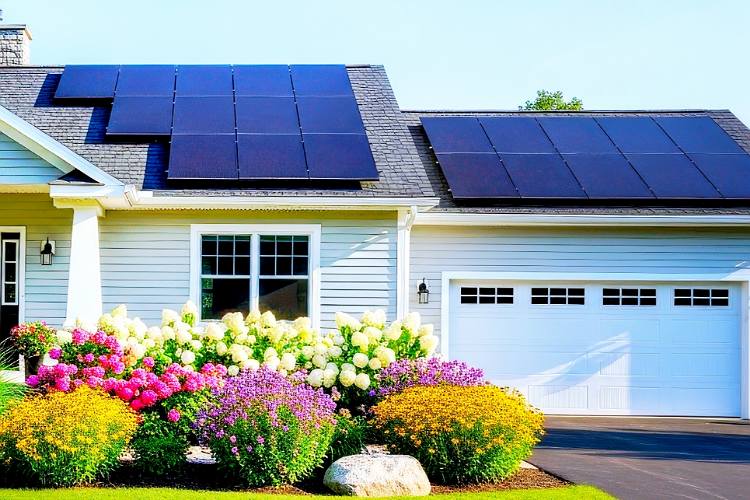
When most homeowners think about improving their home, they think about kitchens, bathrooms, or curb appeal. These are the classic upgrades; the ones that feel tangible and immediate. But there is a growing case that the highest-return home improvement you can make right now has nothing to do with granite countertops or a fresh coat of exterior paint. It is solar panels, and the reasons are more practical than you might expect.
Solar has historically been associated with a specific type of homeowner: environmentally motivated, comfortable with technology, and willing to wait years for a financial payoff. That profile is changing fast. Today, solar installations are being driven by mainstream homeowners who are fed up with high and unpredictable utility bills and are looking for a straightforward way to take more control over their monthly expenses.
The Numbers Behind the Decision
The financial case for residential solar has strengthened considerably in recent years, for a few reasons. First, the cost of solar panels has dropped dramatically over the past decade. What cost $50,000 to install in 2010 can often be done today for $15,000 to $25,000, depending on your home’s size and energy usage. Second, the federal Investment Tax Credit allows homeowners to deduct 30 percent of the system’s total cost from their federal income taxes; a substantial reduction in the effective price of going solar.
Beyond the upfront economics, the monthly math is compelling. A properly sized solar system can offset 80 to 100 percent of a home’s electricity consumption on an annual basis. For homeowners paying $150 to $300 a month in utility bills, that represents $1,800 to $3,600 in annual savings. Over a 25-year system lifespan, the cumulative savings typically far exceed the installation cost, particularly when you account for the near-certainty that utility rates will continue to rise.
Solar also adds measurable value to your home. Multiple studies have found that solar-equipped homes sell for more than comparable non-solar properties. Lawrence Berkeley National Laboratory research has shown an average premium in the range of $15,000 or more, though the exact figure varies by market, system size, and whether the panels are owned outright or leased. If you plan to sell within the next decade, an owned solar system is one of the most reliable ways to improve your home’s appraised value.
What to Look for Before You Install
Not every home is equally well-suited for solar, and it is worth doing some homework before you request quotes. Roof condition is the starting point. If your roof is more than 15 years old or will need replacement in the next five years, it makes sense to reroof first or coordinate both projects simultaneously. Installing solar on an aging roof and then having to remove the panels for a roof replacement is an avoidable extra cost.
Roof orientation and shading matter as well. South-facing roofs with minimal tree or building shading produce the most power, but east and west facing roofs can also perform well depending on your local utility’s time-of-use rate structure. A reputable solar installer will conduct a shading analysis before recommending a system size, and you should expect to see that data in any serious quote.
Understanding your utility’s net metering policy is also important. Net metering allows you to send excess solar power back to the grid and receive credits on your bill, which is a key part of how most residential systems achieve strong economics. Policies vary by utility and state, and some have changed in recent years in ways that affect the math for new installations. Ask any installer you’re evaluating to explain how net metering works in your specific utility territory before you sign anything.
Financing Options Explained
Most homeowners today install solar using one of three financing approaches: cash purchase, solar loan, or power purchase agreement (PPA). A cash purchase typically yields the best long-term return because you own the system outright and capture all the savings and incentives directly. A solar loan allows you to own the system and claim the tax credit while spreading the cost over five to 20 years, with monthly loan payments that are often lower than your current utility bill. A PPA involves a third-party company owning the panels on your roof and selling you the power at a fixed rate. Useful for homeowners who cannot take advantage of the tax credit, but it complicates future home sales.
Andrew Hoesly, General Manager at SolarTech, advises homeowners to focus on ownership rather than convenience when evaluating financing.
“The homeowners who feel best about their solar decision five years later are almost always the ones who own their systems. When you lease or sign a PPA, you’re saving money on electricity but you’re not building an asset. Owned solar improves your net worth, reduces your energy costs, and adds real value to your home when you sell. That combination is hard to beat as a home improvement investment,” said Hoesly.
The process of getting started is simpler than many homeowners expect. Most reputable installers offer a free site assessment and will provide a detailed proposal showing projected production, savings, payback period, and incentive eligibility. Getting three quotes is a reasonable starting point, and comparing not just price but also panel brand, warranty terms, and the installer’s track record in your area will help you make a confident decision.
