
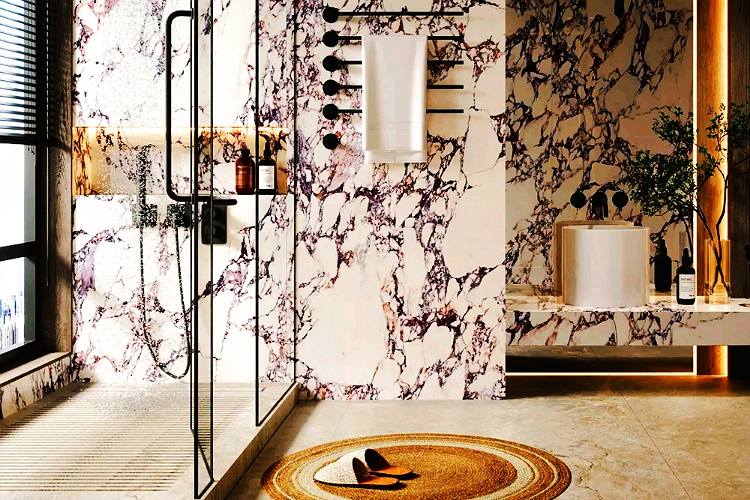
Natural stone has long been one of the most expressive elements in interior design, carrying both geological history and artistic identity into built spaces. In contemporary luxury interiors, materials like Calacatta Viola marble and onyx are no longer treated as simple finishes but as statement pieces that define atmosphere, character, and spatial emotion. The art of choosing natural stone lies in understanding how each type behaves visually, functionally, and emotionally within a design.
Calacatta Viola marble is one of the most striking stones used today. Originating from Italy, it is recognized for its creamy white background intersected with bold veining in deep violet, burgundy, and plum tones. Each slab is unique, almost like a natural painting, which makes it highly desirable for feature applications. Designers often use it for kitchen islands, bathroom vanities, fireplace surrounds, or accent walls where its dramatic patterning can take center stage. Its strength lies in contrast—the ability to introduce movement and visual intensity without needing additional decoration.
Because of its strong personality, Calacatta Viola works best in restrained environments. Minimal cabinetry, neutral wall colors, and simple metallic accents allow the stone to remain the focal point. When overused or paired with overly complex design elements, its impact can be diluted. This is why it is often described as a “hero material” in interior design, meaning it leads the visual story of a space rather than supporting it.
In contrast, onyx offers a completely different design language. Unlike marble, which is defined by surface pattern, onyx is defined by light. It is a translucent stone formed in layers, allowing illumination to pass through its crystalline structure. When backlit, it produces a soft glow that transforms walls, counters, or partitions into luminous art installations. This quality makes it especially popular in luxury hotels, high-end retail spaces, and statement residential interiors.
Onyx is not typically chosen for heavy-use surfaces due to its softness and fragility compared to marble. Instead, it is used strategically—bar fronts, reception desks, feature panels, or decorative insets. Its purpose is atmospheric rather than structural. Where Calacatta Viola creates drama through contrast and veining, onyx creates drama through light diffusion and depth.
The decision between these stones is ultimately about intent. Calacatta Viola introduces bold architectural identity, grounding a space with strong visual weight. Onyx introduces emotional ambiance, softening environments with glow and translucency. Many high-end designers now combine both within a single project to create layered experiences—using marble for permanence and structure, and onyx for sensory impact.
Sustainability and practicality also play a role in selection. Natural stone is a long-term material, and each slab’s uniqueness ensures that no two interiors are identical. However, understanding maintenance requirements is essential. Marble requires sealing and careful upkeep to prevent staining, onyx stone slabs while onyx demands gentle use and controlled lighting conditions to preserve its beauty.
Ultimately, the art of choosing natural stone is about storytelling through material. Calacatta Viola speaks of strength, drama, and artistic confidence. Onyx speaks of light, elegance, and atmosphere. When selected thoughtfully, these stones do more than decorate a space—they transform it into an experience shaped by nature’s own design language.
